

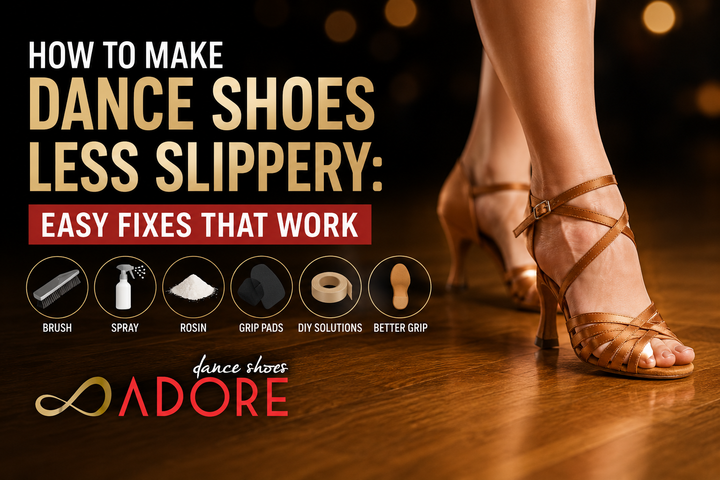
Making dance shoes less slippery is a challenge almost every dancer faces. Whether you are a beginner or a professional, slippery shoes can lead to lost confidence, missed steps, or even injuries. Many dancers spend hours training, only to find their shoes sliding on the floor at the worst moment. You might wonder: Is there a safe, reliable way to make dance shoes grip better? The answer is yes, and it’s not just about buying new shoes. There are practical steps, proven materials, and expert advice that can help you stay secure on any dance floor.

This article explores everything you need to know about reducing slipperiness in dance shoes. You’ll learn why shoes get slippery, how to choose the right material for your dance style, and specific methods to improve grip. We’ll look at products, DIY tips, mistakes to avoid, and even how a specialized store like Adore Dance Shoes can help. Each section gives clear, actionable advice, with real examples and data to help you make smart decisions. If you want to dance confidently, read on.
Why Dance Shoes Become Slippery
Many dancers are surprised to find their shoes sliding too much, even if the shoes are new. Understanding the causes of slipperiness helps you fix the problem more effectively.

Shoe Material
Most dance shoes use suede, leather, or synthetic soles. Suede is popular because it allows smooth turns, but it can wear down quickly. Leather soles are durable but often become slick on polished floors. Synthetic soles can be unpredictable, sometimes feeling sticky, sometimes slippery.
Floor Types
Different floors affect shoe grip:
-
Wood floors: Often polished, can be very slippery for suede or leather.
-
Marble/Tile floors: Extremely slick, especially with dust or moisture.
-
Vinyl floors: Usually more grip, but can become slippery with wear.
A study from the International Association for Dance Medicine found that 60% of dance injuries on slick floors relate to improper footwear or sole maintenance.
Wear And Tear
As shoes age, the sole material flattens and loses texture. Even high-quality shoes eventually become slippery, especially after several months of use. The process is faster if you dance regularly or on rough surfaces.
Environmental Factors
Dust, humidity, or even spilled drinks on the floor can turn shoes slippery in minutes. Many dancers ignore environmental changes, but these can have a bigger impact than shoe material alone.
Choosing The Right Dance Shoe Material
Before you try to fix slipperiness, check if you’re using the best shoe material for your dance style and floor. Here’s a quick comparison:
|
Shoe Sole Material |
Grip Level |
Best For |
Common Issues |
|---|---|---|---|
|
Suede |
Medium |
Ballroom, Latin |
Wears quickly, needs regular brushing |
|
Leather |
Low |
Salsa, Tango |
Slippery on polished floors |
|
Rubber |
High |
Jazz, Hip Hop |
Too much grip for spins |
|
Synthetic |
Varies |
Practice, Street |
Unpredictable grip |
Tip: If you often slip, consider switching to suede soles. They can be brushed to improve grip and are easier to maintain than leather.

Effective Ways To Make Dance Shoes Less Slippery
There are many solutions for slippery dance shoes. Some methods are quick fixes; others require regular care. Let’s explore the most reliable options.

1. Suede Sole Brushing
The simplest and most effective method for suede soles is regular brushing. Over time, suede flattens, losing its grip. Use a wire suede brush to roughen the surface and restore traction.
-
How to brush: Hold the shoe firmly, brush the sole in one direction, then lightly brush back and forth. Do not use excessive force; gentle brushing is best.
-
Frequency: For regular dancers, brush soles before every session.
Non-obvious insight: Many beginners brush too aggressively, damaging the suede. Light brushing is enough. Also, brushing works best on dry soles; avoid brushing wet shoes.
2. Applying Traction Sprays
Traction sprays are commercial products designed to increase grip. They work by adding a sticky layer to the sole.
-
How to use: Spray evenly on the sole, wait for drying (usually 2–5 minutes).
-
Popular brands: Traction Magic, Stop Slip.
Practical tip: Use sprays only on shoes with leather or synthetic soles; they can ruin suede. Test on a small area first.
3. Using Rosin Powder
Rosin powder is common among ballet and stage dancers. It’s a sticky substance that improves friction.
-
How to apply: Sprinkle a small amount on the floor or directly on the sole.
-
Where to find: Dance supply stores, sports shops.
Warning: Rosin can cause residue buildup and damage floors. Use sparingly and clean after use.
4. Adding Grip Pads Or Stickers
Grip pads are adhesive patches you can stick to the bottom of your shoes. They are easy to apply and remove.
-
Types: Felt pads, rubber stickers, textured tapes.
-
Best for: Synthetic or smooth leather soles.
Non-obvious insight: Some pads reduce the ability to spin smoothly. Choose pads that match your dance style.
5. Diy Solutions
If you don’t have commercial products, you can try home remedies:
-
Sandpaper: Lightly sand the sole to create texture. Use fine-grit sandpaper.
-
Water dampening: Slightly wet suede soles to increase grip. Only use on suede; never on leather.
-
Hairspray: Spray a light coat on the sole for temporary stickiness.
Caution: DIY methods are quick fixes, not long-term solutions. Overusing sandpaper can ruin the sole.
6. Professional Sole Replacement
If your shoes are very worn, consider replacing the sole. Shoe repair shops and specialized stores offer sole replacement services.
-
Cost: $25–$50 per pair.
-
Benefits: New soles restore grip and prolong shoe life.
Expert tip: Ask for suede soles with medium thickness for best grip.
Mistakes To Avoid When Fixing Slippery Shoes
Many dancers make mistakes that actually make their shoes worse. Avoid these common errors:
-
Using oil-based products: Oils make shoes slippery and attract dust.
-
Brushing wet suede: This damages the material and reduces grip.
-
Adding thick rubber pads: Too much grip can prevent spins and turns.
-
Ignoring shoe fit: Loose shoes slip more, even with good soles.
-
Not cleaning soles: Dirt buildup reduces traction.
Non-obvious insight: Some dancers try sticky tapes meant for regular shoes, but these often peel off during intense movement. Only use products tested for dance footwear.

Maintaining Dance Shoe Grip Over Time
Improving grip is not a one-time fix. Shoes need regular care to stay safe and comfortable.
Cleaning Shoes Properly
Clean soles after every session. Use a dry brush for suede, a damp cloth for leather. Avoid harsh chemicals.
Storing Shoes Correctly
Store shoes in a cool, dry place. Humidity can flatten the sole and reduce grip. Use shoe bags for protection.
Rotating Shoes
If you dance often, rotate between two pairs. This allows soles to recover and prolongs their life.
Scheduling Maintenance
Plan regular maintenance every 2–3 months. Schedule brushing, cleaning, and sole checks.
|
Maintenance Task |
Recommended Frequency |
Benefits |
|---|---|---|
|
Brushing Suede Sole |
Before every session |
Maintains grip |
|
Cleaning Leather Sole |
Weekly |
Removes dust and buildup |
|
Sole Replacement |
Every 12–18 months |
Restores traction |
|
Grip Pad Change |
Every 3–6 months |
Ensures consistent friction |

How Dance Style Affects Shoe Grip Needs
Different dance styles require different levels of grip. Choosing the wrong solution can affect your performance.
Latin And Salsa
These styles need moderate grip for spins and quick footwork. Too much grip stops movement; too little causes slips. Suede soles with regular brushing are ideal.
Tango
Tango dancers want smooth gliding, but safe stops. Leather soles work well, but benefit from grip pads or sprays.
Heels And Pole
Heels require extra stability. Rubber pads help prevent sliding, but dancers must avoid pads that block pivots.
Practice And Street Dance
Practice shoes and street styles often use synthetic soles. These need frequent checks and may benefit from grip stickers.
Data insight: A survey by Dance Magazine found that 70% of Latin dancers prefer suede soles, while only 35% of tango dancers do.
Advanced Tips For Dancers
Once you master basic grip fixes, consider these advanced strategies.
Customizing Shoe Soles
Some dancers add a mix of suede and rubber to the sole. This gives grip for stops and smoothness for spins. Custom sole work can be done at specialized stores.
Floor Preparation
Before dancing, check the floor. Sweep away dust and moisture. If allowed, use rosin or grip powder lightly on the surface.
Monitoring Environmental Conditions
Humidity, temperature, and floor finish change grip levels. Experienced dancers test their shoes before every performance. Adjust maintenance as needed.
Consulting With Experts
If you’re unsure, talk to a dance shoe specialist. They can recommend specific products, sole types, and maintenance routines.
How Adore Dance Shoes Supports Dancers

Adore Dance Shoes is more than an online store. It’s a resource for dancers who want confidence and performance on every floor.
High-quality Shoe Selection
Adore Dance Shoes offers premium footwear for styles like Latin, Salsa, Tango, Heels, Pole, and Bridal dance. Each shoe is designed for comfort, stability, and style.
-
Shoes feature professional-grade suede and leather soles.
-
Designs focus on proper fit and foot support.
-
Options for practice and stage environments.
Repair And Maintenance Services
Adore Dance Shoes provides expert repair and sole maintenance. Services include:
-
Suede sole replacement
-
Brushing and cleaning
-
Custom grip pad application
Professional Advice
The store’s team offers guidance on shoe selection, fit, and grip solutions. Whether you’re a beginner or advanced dancer, you’ll find support.
Brand Philosophy
Adore Dance Shoes emphasizes durability and design standards. Shoes are tested for grip, stability, and comfort. Dancers can perform confidently, knowing their footwear is up to the task.
Visit: Adore Dance Shoes to explore products, book maintenance, and get expert advice.
Comparing Grip Improvement Methods
To help you choose the best solution, here’s a comparison of popular methods:
|
Method |
Cost |
Duration |
Best For |
Drawbacks |
|---|---|---|---|---|
|
Suede Brushing |
$10 (brush) |
Daily/Weekly |
Suede soles |
Needs regular effort |
|
Traction Spray |
$15–$30 |
1–2 sessions |
Leather/Synthetic |
Temporary, can damage suede |
|
Rosin Powder |
$10–$20 |
Per use |
Ballet, stage |
Messy, floor residue |
|
Grip Pads |
$5–$25 |
3–6 months |
Leather/Synthetic |
Can reduce spins |
|
DIY (Sandpaper/Hairspray) |
Low |
Short-term |
Any sole |
Risk of damage |
|
Sole Replacement |
$25–$50 |
12–18 months |
Old shoes |
Higher cost |
Non-obvious insight: Many dancers combine brushing with grip pads for best results. They switch pads depending on dance style and floor.
What To Look For In Professional Dance Shoes
If you’re buying new shoes, choose wisely. Here’s what matters:
-
Sole material: Suede for moderate grip, leather for smoothness, rubber for high traction.
-
Fit: Shoes should hug the foot but not pinch. Loose shoes lead to slips.
-
Heel height: Higher heels affect balance. Choose lower heels for practice.
-
Foot support: Look for arch support and cushioned insoles.
-
Brand reputation: Trusted brands like Adore Dance Shoes offer quality and durability.
Mistake to avoid: Don’t choose shoes based on appearance alone. Performance and safety are more important.

Frequently Asked Questions
How Often Should I Brush Suede Soles?
Brush suede soles before every dance session. If you dance several times a week, brushing keeps the texture fresh and maintains grip. Avoid brushing wet or dirty soles.
Can I Use Regular Shoe Grip Pads On Dance Shoes?
No, most regular shoe pads are not designed for dance movement. They may peel off or block spinning. Always use dance-specific grip pads or stickers.
Is It Safe To Use Hairspray Or Sandpaper On Dance Shoes?
These are temporary fixes. Hairspray gives quick grip but wears off fast. Sandpaper can damage soles if used too much. For long-term results, use proper brushes or professional products.
What Should I Do If My Shoes Are Still Slippery After Trying These Methods?
Check the fit and sole condition. Loose shoes slip more. If soles are worn, consider professional replacement or buying new shoes from trusted brands like Adore Dance Shoes.
How Can I Prevent Dance Shoes From Becoming Slippery In The First Place?
Regular maintenance is key. Clean soles after each session, store shoes in dry places, and avoid dancing on dirty or wet floors. Choose the right sole material for your dance style and floor.
Dancing safely and confidently starts with proper shoe care. Whether you use simple brushing, commercial sprays, or expert services, making your dance shoes less slippery is possible for everyone. With the right knowledge and tools, you can turn every step into a secure and stylish performance.

